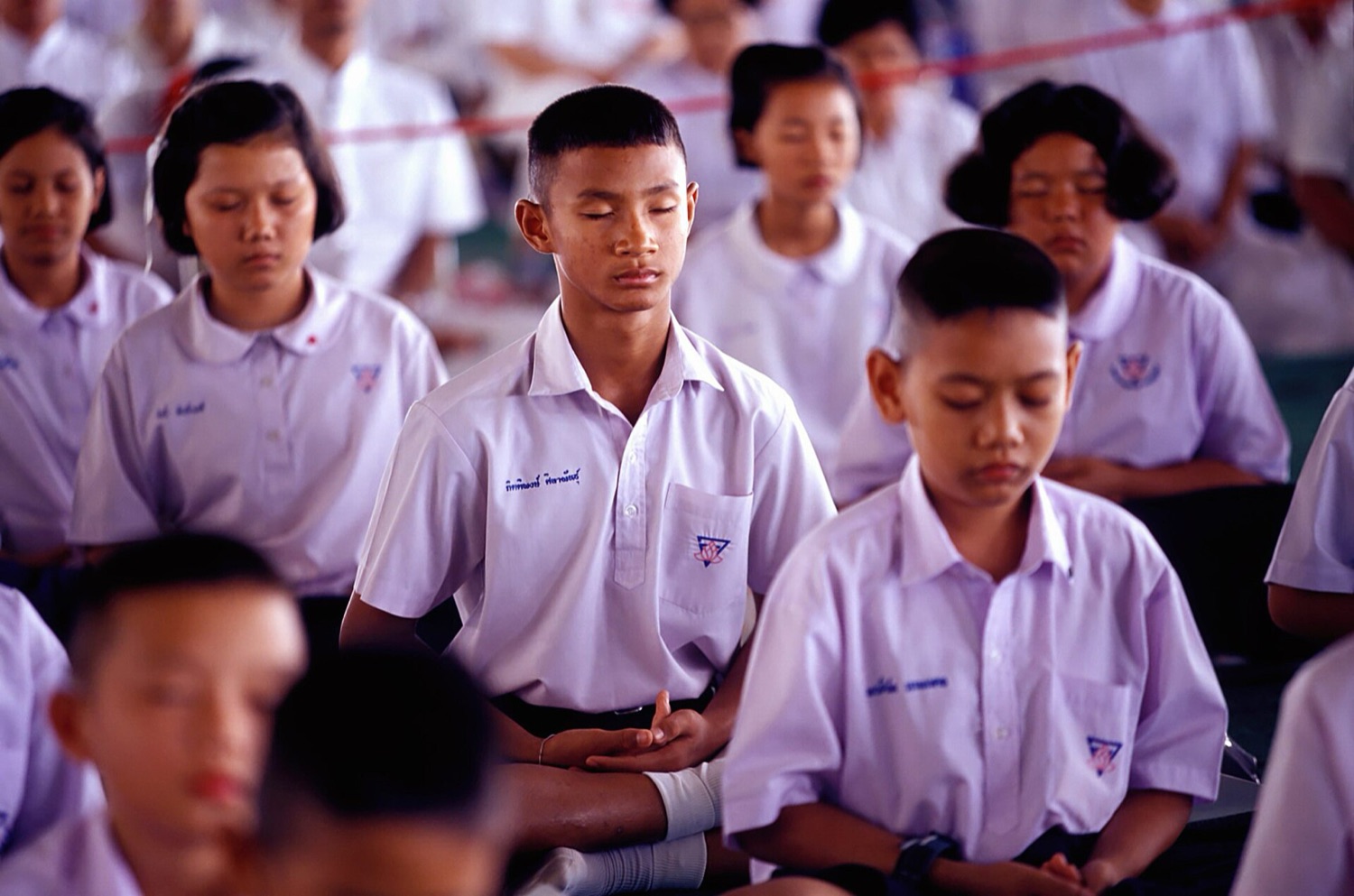
Mindfulness means paying attention to the present moment on purpose, with curiosity rather than judgement. For children it can be as simple as noticing three breaths, listening to a chime fade away or walking slowly enough to feel each foot touch the floor.
Mindfulness by length
| Length | Practice | Good for |
|---|---|---|
| 1 minute | Three balloon breaths: breathe in to fill a balloon in the belly, breathe out to let it float away | Before a test, after a spill or argument |
| 2 minutes | Mindful listening: ring a chime and raise a hand when you can no longer hear it; then name every sound you notice | Settling after recess |
| 3 minutes | Five senses: five things you can see, four you can hear, three you can feel, two you can smell, one you can taste | Anxious or scattered moments |
| 4 minutes | Silly walking mindfulness: walk in slow motion like an astronaut, then on tiptoe, then like a heavy elephant, noticing how each feels | Wiggly afternoons, indoor recess |
| 5 minutes | Guided visualisation: imagine a calm place, its colours, sounds and temperature | Before quiet reading or writing |
| 10 minutes | Body scan: lying or sitting, move attention slowly from toes to head, relaxing each part | End of a long day, before a big event |
Breathing techniques children remember
- Smell the flower, blow out the candle. In through the nose, out through the mouth.
- Five-finger breathing. Trace up each finger while breathing in and down while breathing out.
- Square breathing. In for four, hold for four, out for four, hold for four, while drawing a square in the air.
- Bumblebee breath. Breathe out with a gentle humming sound. Younger children love it.
- Teddy bear breathing. Lying down with a soft toy on the belly, watch it rise and fall.
What the research says
Studies of school mindfulness programmes report benefits for attention, stress and wellbeing in some groups of children, but results vary a lot between programmes and ages. A large UK trial with secondary students, published in 2022, found that a mindfulness course did not do better than the usual social-emotional teaching schools already offered. The sensible conclusion for elementary teachers: short, regular, well-led practice is a useful calming tool, but it is one tool among many and not a treatment for anxiety or other conditions.
Keep it invitational and safe
- Eyes open is fine. Offer "close your eyes or look softly at the floor". Some children, including those who have experienced trauma, feel unsafe with eyes closed.
- Never force stillness. A child who fidgets quietly is still participating.
- Keep it short. One to three minutes is plenty for most young children. Build up slowly.
- Practise when calm. A technique learned on a calm Tuesday is far more likely to be used in an upset moment.
- Model it. Do the breathing yourself. Children copy the adult more than the instructions.
A mindful minute script: “Let's find a still body. Feet on the floor, hands in your lap. Eyes closed or looking down. Breathe in... and out. Notice the air coming in cool and going out warm. One more... Now open your eyes and look at someone and smile.”
Combine mindfulness with colour check-ins so students learn when to use it, and use energy brain breaks when the class needs to move rather than settle.