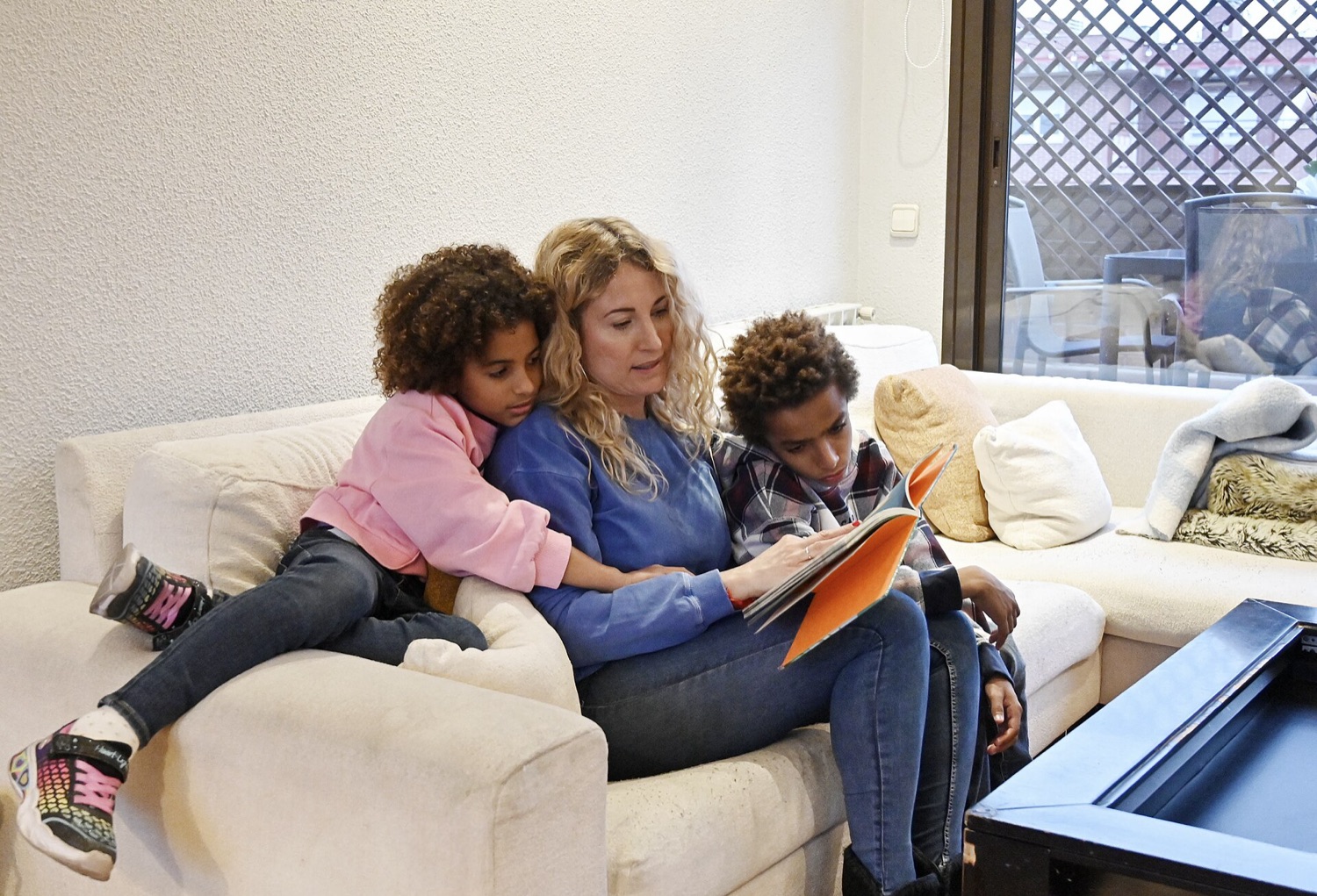
The same short activities that work in a classroom work at the kitchen table. Parents and carers do not need a curriculum to support social-emotional learning at home: a few predictable routines, a little practice and a lot of listening go a long way.
Set a daily reminder
Consistency beats intensity. A phone reminder or a note on the fridge ("4:00: check-in and snack") turns good intentions into a habit. Ten minutes a day is more useful than an hour on Sunday.
An after-school check-in
"How was school?" usually gets "Fine." Try specific questions instead:
- What was the best part of your day? What was the hardest?
- Who did you play with at recess?
- What colour were you most of today: blue, green, yellow or red? (See colour check-ins.)
- Did anyone do something kind today? Did you?
Homework helpers
- Background music. Quiet instrumental music for 10 or 20 minutes can mark homework time. Skip it for reading and writing if it distracts. More in focus music.
- Countdowns. A visible timer of 5 to 10 minutes makes a long worksheet feel manageable, followed by a short break.
- First-then. "First spelling, then the park." Simple sequences reduce arguments.
Brain breaks at home
Dance to one song, stretch like a cat, do ten jumping jacks or simply walk around the garden. When a child is wound up, try the opposite: lie down, take five balloon breaths, then visualise a favourite calm place. Our brain breaks guide sorts ideas by energy level.
Mindful minutes
One to five minutes of mindfulness before bed or after a tough moment helps children learn to calm their bodies. Do it together; children copy adults.
Quick learning games
| Game | How to play | Skill |
|---|---|---|
| Count by | Count by 2s, 5s, 7s or any number between 2 and 20, taking turns | Multiplication facts |
| Word of the day | Pick a new word at breakfast; use it three times before dinner | Vocabulary |
| Rhyme time | Say a word; everyone finds rhymes until someone gets stuck | Phonics |
| Fable of the week | Read a short fable and ask what lesson the characters learned | Comprehension and values |
| Mystery number | "I'm thinking of a number between 1 and 50..." with yes/no questions | Number sense |
Bedtime reflection
End the day with two questions: "What is one thing you're proud of today?" and "What is one thing you're looking forward to tomorrow?" It takes a minute and ends the day on a hopeful note.
Partner with the teacher: ask which routines and words the class uses (a calm-down phrase, a feelings chart, a goal sheet). Using the same language at home and school makes both stronger.