Casinos are probability made visible. For anyone who teaches, or simply enjoys, a bit of maths, the numbers behind roulette and blackjack are a neat lesson in expected value, and they explain why the casino always wins in the long run while individual players sometimes win big on a single night.
Expected value and house edge
The expected value of a bet is the average result you would get if you made it many, many times. The house edge is the casino's average profit as a share of each bet. A house edge of 5% means that, on average, the casino keeps five cents of every dollar wagered over time.
Worked example: American roulette
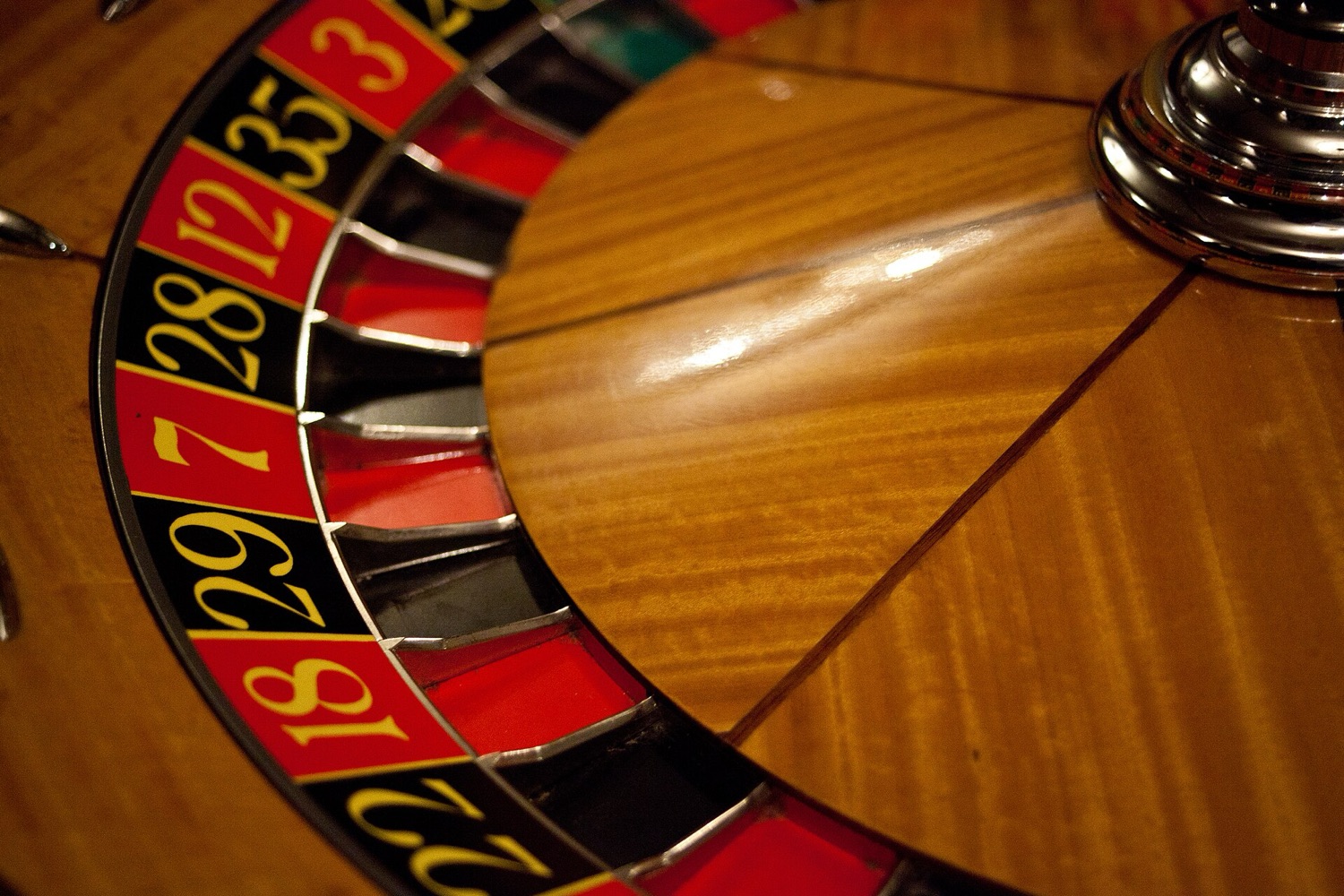
An American wheel has 38 pockets: 1 to 36, plus 0 and 00. A single-number bet pays 35 to 1. Bet $1 on one number 38 times and, on average, you win once (+$35) and lose 37 times (−$37). Net result: −$2 over $38 wagered, a house edge of 2 ÷ 38, or about 5.26%.
A European wheel has a single 0, so 37 pockets. The same bet loses $1 per $37 on average: about 2.70%. Some French tables return half of even-money bets when 0 comes up, cutting the edge on those bets to about 1.35%.
House edge by game
| Game and bet | Typical house edge | Notes |
|---|---|---|
| Blackjack, basic strategy | About 0.5%, sometimes lower | Depends on rules; tables paying 6:5 for blackjack add roughly 1.4 points |
| Craps, pass line | 1.41% | Taking "odds" behind it adds a bet with no house edge |
| Baccarat, banker | 1.06% | After the usual 5% commission |
| Baccarat, player | 1.24% | |
| Baccarat, tie (8 to 1) | About 14.4% | One of the worst bets on the floor |
| European roulette | 2.70% | |
| American roulette | 5.26% | The 0-00-1-2-3 "basket" bet is worse, at about 7.9% |
| Slot machines | Varies widely, often several percent or more | Set by the machine and regulated by each state |
| Keno | Often 20% to 30% or more | Fun, slow and expensive |
What it costs per hour
House edge becomes concrete when you multiply it by how much you bet in an hour:
Expected cost per hour = bet size × bets per hour × house edge
A $10 blackjack player making about 70 hands an hour at a 0.5% edge can expect to lose around $3.50 an hour on average. The same $10 on American roulette, at maybe 40 spins an hour and 5.26%, comes to about $21 an hour. Same night out, very different price.
Why players still win sometimes
House edge is an average. In the short run results swing widely: that is volatility. A player can be up after an evening, which is part of the fun. Over thousands of bets, though, the law of large numbers pulls results toward the expected value, which is why casinos can predict their revenue so reliably.
The gambler's fallacy
If red has come up eight times in a row, is black "due"? No. Each spin is independent; the wheel has no memory. Believing otherwise is called the gambler's fallacy, and it is a great real-life example for anyone explaining independent events. Betting systems that raise stakes after losses do not change the house edge either; they only change the shape of the swings.
Using this at the table
- Choose low-edge games and bets if you want your budget to last longer.
- Learn basic strategy before playing blackjack; small free strategy cards are widely available.
- Look for 3:2 blackjack payouts and single-zero roulette.
- Treat the expected cost as the price of entertainment, and plan it into your trip budget.
Home game twist: poker is different because players compete against each other and the house takes a fee rather than having an edge on each hand. That is why skill matters in the long run. See hosting poker night with colleagues.